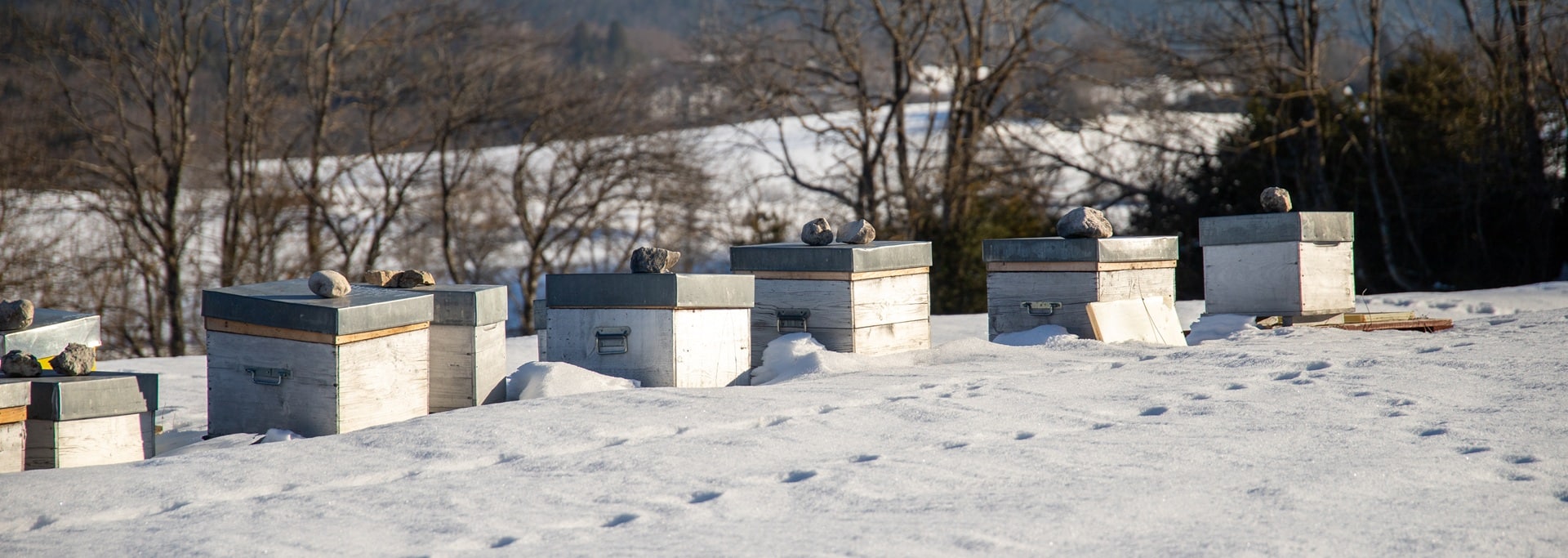
In December, the key word for beekeepers is " do not disturb." The colonies are clustered together, and opening the hive could disrupt their thermal organization. Their role is therefore limited to external monitoring, to check that the hives are not weakened or attacked by pests such as woodpeckers, martens, or rodents. Beekeepers also check the stability of the hives, the condition of the flight boards, the humidity, etc. Above all, they keep a close eye on the reserves, as the unusually mild weather in recent seasons has caused the bees to consume more. In short: they observe and protect, but do not touch anything until the mild weather returns in spring.
Our beehive, new generation version
Despite chaotic weather conditions, honey production is on the rise again in 2025, with 23,000 tons harvested. More than ever, protecting bees remains a major challenge.
An encouraging harvest... but colonies still under pressure
📷 DLA Design & Web
After a difficult year in 2024, the 2025 beekeeping season is giving the industry a boost. With 23,000 tons of honey harvested, production is on the rise again, even if it is still far from the good years, when hives produced between 30,000 and 35,000 tons.
Behind this improvement lie the same challenges as ever: chaotic weather, disrupted flowering, shorter foraging periods... and an Asian hornet that is more prevalent than ever, particularly in the southwest and center of the country. Added to this are pesticides that are still overused (65,000 tons sold each year) and intensifying foreign competition: 35,000 tons of honey imported in 2025, often at low prices and to the detriment of quality.
The result: despite only 14,000 tons of French honey actually being available, beekeepers are struggling to sell their product. Some are holding onto their stock, while others are selling at a loss. It's a paradoxical situation that highlights how fragile the industry remains—and how essential it is to protect pollinators.
In December: winter sets in, the hive closes...
December marks the beginning of winter: no foraging, the bees huddle together to stay warm. At this stage, the beekeeper must not open the hive. Their role is limited to observing from the outside: checking for pests (mice, woodpeckers, etc.), monitoring humidity and the stability of the hives, and keeping an eye on reserves.
With unusually mild weather and significant stress caused by the Asian hornet, colonies have consumed more of their food supplies. This is yet another reason to monitor them closely. As soon as the weather starts to warm up, vigilance must continue: traps must be set quickly to limit the future summer proliferation of hornets.
*Amouse can get into the hive, gnaw on the frames, and build its own nest, leaving behind dirt that makes the place unsuitable for bees.
**Woodpeckerstap on the hive during winter in an attempt to reach the colony, causing stress and disturbing the bees as they rest in clusters.
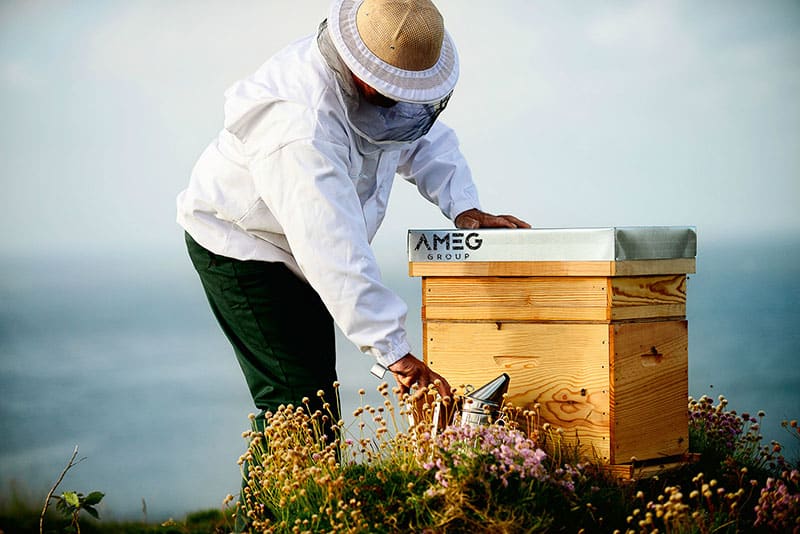
And from the beekeeper's perspective...
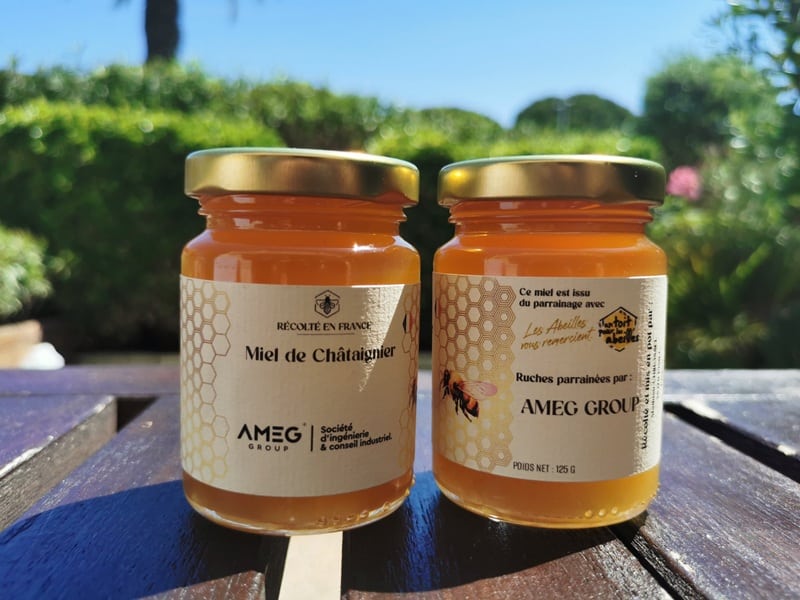
🐝Follow AMEG Group's example... support Un Toit pour les Abeilles (A Roof for Bees)
See also
Kintana ILTIS | 2026 French Lead Climbing Championships
A few days before the 2026 French Lead Climbing Championships, Kintana ILTIS shared her state of mind, her doubts, her progress, and her ambitions with us. Today, we invite you to read this account, written just before the competition.
Read more
Team AMEG Sport Welcomes Two New Athletes
Team AMEG Sport welcomes two new elite athletes to join Triomphe Collectif: Alice Marceau, a para-alpine skiing specialist, and Perrine Gindre, a rising star in French ski mountaineering. Two inspiring journeys driven by the values of perseverance, resilience, and pushing one’s limits.
Read more